1) From overwork to burnout to resilience
As a child, I thought sleep was a waste of time. Later as a young professional, I believed working hard and long hours was the key to success.
Fast forward to 2021: I joined Resilience@Google, a team focused on preventing burnout, promoting sustainable performance, and supporting mental health. After 18 years in the corporate world including 11 years at Google – managing high-pressure roles, constant travel, and stress – I was getting dangerously close to burnout.
Despite having a healthy lifestyle and practising some stress-management techniques, I still felt something was missing. I needed to go deeper:
- How do we perform at our best while protecting our well-being?
- How do we sustain high performance without breaking down?
At Resilience@Google, we had the privilege of interviewing neuroscientists, sports psychologists, elite coaches, and top athletes. My biggest takeaway?
💡 Would you expect an elite athlete to train 12 hours a day, every day to win their next competition? Of course not! You’d expect them to take breaks – physically, to allow their muscles to recover and, mentally to release pressure. Otherwise, they wouldn’t last the whole season. In fact, elite athletes train hard, but they also rest smart. They schedule recovery periods before and after competitions, knowing that without rest, their performance will suffer.
While experiencing this intense ‘forced’ rest, I’ve realised that beyond recovery, rest also enables discovery. With more space to think, read, play with my children, observing nature (through the window or by strolling like a turtle in my garden) and connect with my loved ones, it opens the door to learning, growing, and more creative and clearer thinking – in both my personal and professional life – in ways that intense work or constant busyness can’t.
🤔 So why do we expect us – professionals, Olympians of the office that we are – to work at full speed, all the time? In the corporate world, we still too often glorify overtime, overload, hyperconnectivity and busyness…In the sports world, they understand that peak and sustainable performance is built on rest. We also better start considering rest as a priority to thrive over time! It’s not about reducing effort or compromising engagement but enhancing them with proper rest.
2) Still thinking rest = laziness ? Science proves the opposite!
📈 Productivity: Did you know that muscle strength builds between workout – not during them? Surprising right! Just like athletes stimulate muscle growth through rest, our brains also require downtime to function at their best. Studies show that taking breaks improves cognitive functions and problem-solving by 40% (Harvard Business Review, 2017). Have you ever noticed that your best ideas come in the shower or on a walk? It’s our brain switching to ‘default mode,’ forming new connections when we’re not focused on demanding tasks.
🤝 Emotional Intelligence: Well-rested individuals regulate their emotions better, leading to stronger relationships both in and outside the workplace, and more trust within teams trust – making them overall better leaders! On the flip side, chronic fatigue reduces empathy and patience, damaging team (Daniel Goleman, Emotional Intelligence Research) and family dynamics. I’ve certainly noticed this recently, being well-rested, I’m much more patient with my kids. Without enough rest, stress takes over, making irritability and frustration more likely at work and at home.
🏃♂️ Recovery. Just like elite performers incorporate recovery days to prevent injury and sustain performance, we – as professionals – need to build intentional rest into our work routines to recharge body & mind. Ignoring recovery leads to exhaustion – studies show that overworking results in 50% higher burnout risks (World Health Organization, 2019). Sustainable success isn’t about working harder; it’s about balancing effort with recovery.
🚀 Leadership: Research from Harvard Business Review (2019) shows that professionals who get enough sleep are 18% more likely to be promoted!! (If only I had known this during my promotion cycles – It would have helped! Haha!) Well-rested minds receive higher ratings in leadership, communication, and decision-making than others
🌱 Team growth: Managers and organisations who actively promote rest create more engaged and high-performing teams. Teams that take proper breaks and vacations generate three times more creative solutions than overworked teams (University of Illinois, 2011), while well-rested teams are 23% more productive than sleep-deprived ones (HBR, 2019). The message is clear: prioritizing rest isn’t just good for individuals – it’s a game-changer for team performance and innovation.
Both surprising and exciting, right?!
3) What do we mean by Rest?
Rest isn’t just about doing nothing – it’s the act of intentionally pausing physical or mental activity to rebuild and recharge our drained resources: energy, focus, and well-being especially after stress or intense work. Rest can be passive (sleeping, meditating, deep breathing) or active (engaging in low-effort, enjoyable activities like reading, walking, playing, talking with friends or stretching).
Elite athletes use recovery days, off-seasons, light training, cross-training, deep tissue massages. They prioritize sleep, have mindfulness practices…Without these moments, they would underperform, injure themselves or burnout.
4) Strategies to integrate Rest for yourself, your team, and your organization
Now, let’s talk about us, professionals, managers, and leaders. What are we doing to rest? How do we ensure our teams are well rested?
😴 Sleep is the New Black!
Not to sound like a broken record, but sleep isn’t just important – it’s non-negotiable. Both by quantity (8-9h) and by quality! Want to improve your sleep? Try establishing a relaxing bedtime routine: dim the lights, practise gentle activities like reading, breathing exercises, light stretching. Avoid stimulants like your phone, coffee, alcohol, or night work (out)!
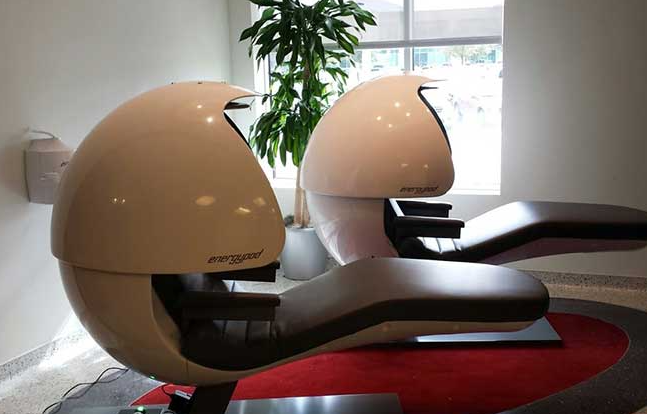
> Managers, consider normalising naps! A 20-minute nap can improve alertness and performance as much as two extra hours of nighttime sleep. No wonder companies like Google have nap pods for employees (I’ve used them myself!). I recently discovered the “Genius sleep pattern”. It refers to the atypical sleep habits of highly creative individuals, such as Albert Einstein, who slept 10 hours a night and took daily naps. He swore that this had a direct impact on his creativity and problem-solving abilities. I’ve been napping every day for two weeks; my mind is getting almost tired of my too many new ideas! Haha
👀 Get the hell out of your screen!
Schedule non-digital and regular breaks during your day, week, life – step away from your screen, move, get outside, have a conversation with a colleague (yes, real human interaction!), a quick stretch, or a short walk. Take your leave and go on holidays leaving your computer at home! Schedule these breaks into your calendar so it actually happens, and become a role model for your colleagues.
> Managers, listen up: stop sending emails late at night, during weekends and vacations! Studies show that when managers email outside of work hours, team stress increases by 40% – even if employees don’t respond (Harvard Business School, 2022). And no, saying “I don’t expect a response” doesn’t help. People will still think about it, stress over it, or feel guilty for not replying. Instead, be a real inspiring leader: model healthy work habits. Teams with managers who actively model rest score 25% higher in engagement and job satisfaction (McKinsey, 2021). So don’t hesitate anymore!
🛠️ Build rest into your team culture
It’s time to build a culture of recovery at work. Be bold – push for policies that protect well-being and for the behaviours to evolve:
- Speak out against the culture of overwork, late night emails, immediate responses, and sacrificing holidays! Embrace and promote Rest loudly and with pride!
- A 4-Day Workweek Research shows that companies making the shift see a 25-40% boost in productivity, with employees feeling happier and more engaged.
- Post-project recovery days. After high-stress deadlines, give people a proper reset day before jumping directly into the next big thing.
- No-emails-after-hours policies. Companies that ban after-hours emails see a 30% increase in retention rates (Deloitte, 2020).
🌿 Mindfulness practises
Mindfulness techniques like breathwork, pausing for a moment of silence or meditation, are game-changers for focus, stress reduction, and emotional resilience. In fact, less than five minutes of deep breathing have real positive impacts on stress level and focus – my clients tell me this after each practice at the beginning of our sessions!
Final thoughts: Rest is a power move, not a weakness
I know – resting isn’t easy for those of us – like me – who were conditioned to believe that success = constant action. For a long time, I overworked (out) myself, thinking it was the price to pay for performance. But the real game-changer? Understanding that rest fuels performance – whether in sports, work, leadership, or life.
In my real life (outside this forced rest period!)I’ve made rest a non-negotiable part of my life – a true superpower: long and quality sleep, mindful breaks (alone or with others), walks (with or without calls), playing the piano, breathing, yoga…
Let’s now dare to ask ourselves:
🔹 Am I rested enough?
🔹 Is my team getting enough rest?
Rest is not a luxury – it’s a performance strategy. So, how will you integrate rest into your routine?
> Looking for help to avoid burnout and to perform sustainably, Let’s discuss wellbeing coaching!
> Looking for your organisation to build a culture of rest instead of glorifying overwork – understanding the ROI of wellbeing for their team, Let’s discuss wellbeing consulting!