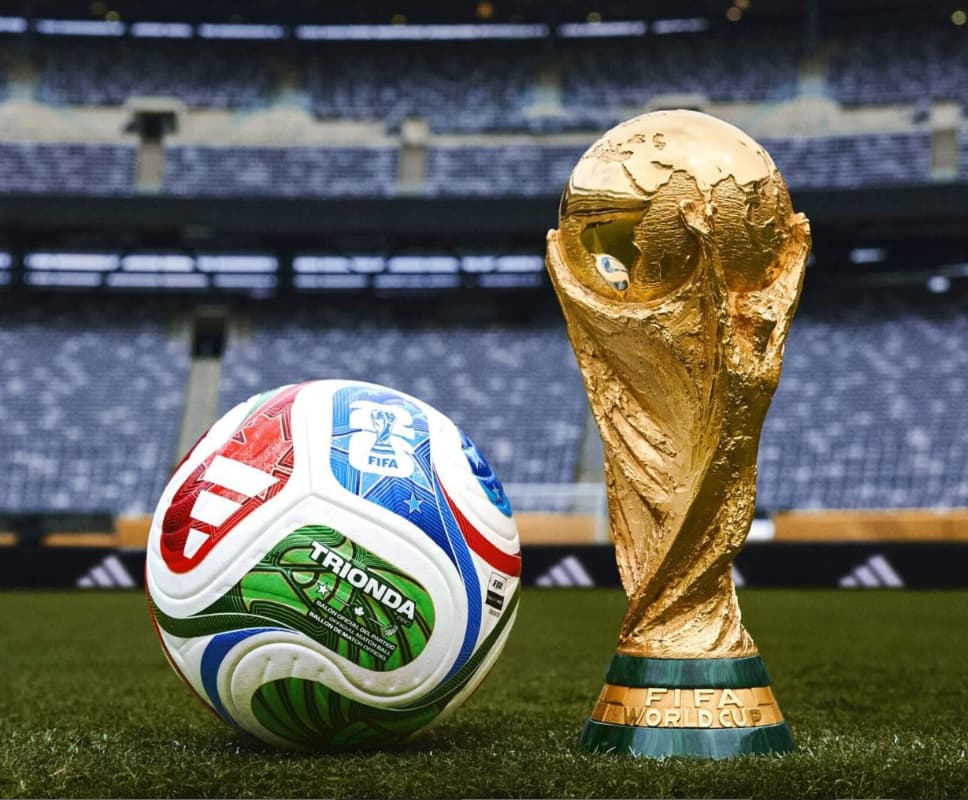
Why you shouldn’t skip the world cup (Even if you aren’t a football fan)
June is notoriously intense. Between mid-year work deadlines, mounting to-do lists, holiday planning, and school shows, it is easy to look at the current news and feel completely overwhelmed.
When life gets busy, it’s easy to tune out global events. But there is something massive happening right now that you shouldn’t pull away from: The 2026 World Cup.
Full disclosure: I am not a traditional football fan. But my oldest son is. He plays, analyzes matches, and memorizes scores from games that happened long before he was even born. Since this tournament started, he’s been waking up at 4:00 AM just to catch the live games.
A few days ago, he looked at me and said: “Maman, it’s the best moment of my life.”
His pure excitement immediately transported me back to 1998 and the magic of France’s first World Cup victory. It also reminded me of the 2024 Paris Olympics—and how many of us almost missed out on the joy because we spent months listening to negative media forecasts. We nearly skipped the party because we focused strictly on what could go wrong.
This time, let’s not make the same mistake.
Yes, there are valid criticisms to be made about sports politics, big money, and FIFA. Those conversations matter. But for one month, let’s look at what this event can actually do for our personal health. Beyond the pitch, a global tournament offers three powerful benefits for our mental wellbeing.
1. Cultivating Social Connection: Better Together
A massive global tournament has a unique, almost magical ability to unite us. It sparks immediate bonds within families, workplaces, neighborhoods, and entire nations.
For a few short weeks:
-
Families pull up chairs around a shared screen.
-
Friends gather in buzzing local cafés.
-
Colleagues step away from shop-talk to discuss a spectacular goal.
In a world that often feels deeply fragmented, these shared collective experiences are incredibly precious. When scientists study what helps humans live longer, healthier, and happier lives, one factor consistently outranks the rest: the quality of our social relationships.
People need people. Major sporting events act as a social catalyst, creating effortless environments for connection.
At Work: Harness this collective energy! Watch a match together on a lunch break, organize a casual office prediction challenge, or simply dedicate the first five minutes of a meeting to laughing about the latest games. It’s a seamless way to build a stronger sense of workplace community. (Note: I’m already counting down the days to host the World Cup Final at my place on July 19th, gathering with my extended family!)
2. Emorational Resilience: A Safe Space to Feel Alive
When was the last time you experienced intense joy, anxiety, hope, frustration, anger, and absolute relief all within the span of 90 minutes?
Modern daily life has a habit of flattening our emotional range. We spend hours behind glowing screens managing automated emails, rigid routines, and exhausting schedules. We keep our heads down, staying busy and inherently stressed.
Then, a single game changes everything. It makes us jump off the sofa, shout, laugh, hold our breath, or hug a complete stranger.
Experiencing this emotional rollercoaster is actually a profound way to release accumulated stress. In psychology, this concept is known as “emodiversity.” Much like biodiversity keeps an ecosystem thriving, a rich mix of both “positive” and “negative” emotions is vital for mental health and resilience.
-
At Home: The next time you sit down to watch a game, give yourself permission to react like a 10-year-old. Cheer. Cry out. Celebrate. Letting yourself fully feel those raw emotions is just as therapeutic as a high-energy dance session or karaoke night.
3. The Power of Recovery: Permission to Pause
For a few weeks, it becomes socially acceptable to slow down and intentionally change our pace. It deeply resembles hanami during Japan’s sakura season, where an entire country collectively pauses to simply stop and admire the cherry blossoms.
During a major tournament, we take the time to sit down with loved ones without multi-tasking, without doom-scrolling, and without checking work notifications.
In a culture entirely obsessed with constant achievement and productivity, these collective pauses are rare. True recovery is not a luxury—it is a physiological necessity. Research consistently proves that intentional periods of rest radically improve our long-term performance, creativity, and cognitive health.
-
For Yourself: If you really don’t love soccer, use the tournament as a personal training ground for your ability to disconnect. Challenge yourself to put your phone in another room for 90 minutes and be entirely present in the room.
-
At Work: If a high-stakes game falls during standard office hours, consider organizing a collective viewing break instead of fighting the distraction.
Final Thoughts: More Than Just a Game
True wellbeing doesn’t always require silent meditation retreats, isolation, or a stack of self-help books. Sometimes, it can be discovered in something as beautifully simple, raw, and universally shared as a football match.
The World Cup is a lesson in hope for victory and a practice in resilience through defeat. On the pitch, we witness incredible stories of human perseverance, reminding us of what is possible when people refuse to give up.
So for the next few weeks, let’s enjoy the atmosphere. Let’s connect, let’s feel, and let’s take a well-deserved pause.
This time, don’t stay on the sidelines—join the game!
What about you? What has been your favorite or most emotional moment of the tournament so far? Let me know in the comments below!