Finding Inner Peace in a chaotic world: 3 steps to protect your mental health
Last week, I had dinner with close friends—and for once, it wasn’t entirely fun.
The conversation quickly turned heavy. Wars, political instability, societal crises, and threats to the future dominated the table. By the time we said our goodbyes, a collective cloud of anxiety hung over all of us.
The next morning, I opened my usual news podcast. The headline of the day? “The new nuclear threat that worries the world.”
It felt like a clear signal. It was time to talk about this openly.
How do we build, protect, and restore our inner peace—how do we lead, work, parent, and show up—when the outside world feels like it’s getting more chaotic by the second?
What Global Chaos Does to Our Psychology
When the world feels unstable, we feel anxious. But anxiety isn’t just a single emotion. It is a heavy, complex layering of many different feelings hitting us all at once:
-
Anger at blatant injustice and violence.
-
Sadness for the victims and for lost global ideals.
-
Disillusionment or losing faith in humanity.
-
Guilt because we continue to live comfortably while others suffer.
-
Helplessness—that paralyzing feeling of “There’s absolutely nothing I can do.”
-
Mental Overload from an endless cycle of crises and information.
-
Fear for our children and what the future holds.
As a mother of four boys, these thoughts hit close to home. Lately, I’ve found myself thinking about them going to war. I picture my great-grandfathers in uniform and realize: that could be them one day. I see mothers mourning on the news, and the thought echoes: that could be me.
The Dissonance We Face at Work
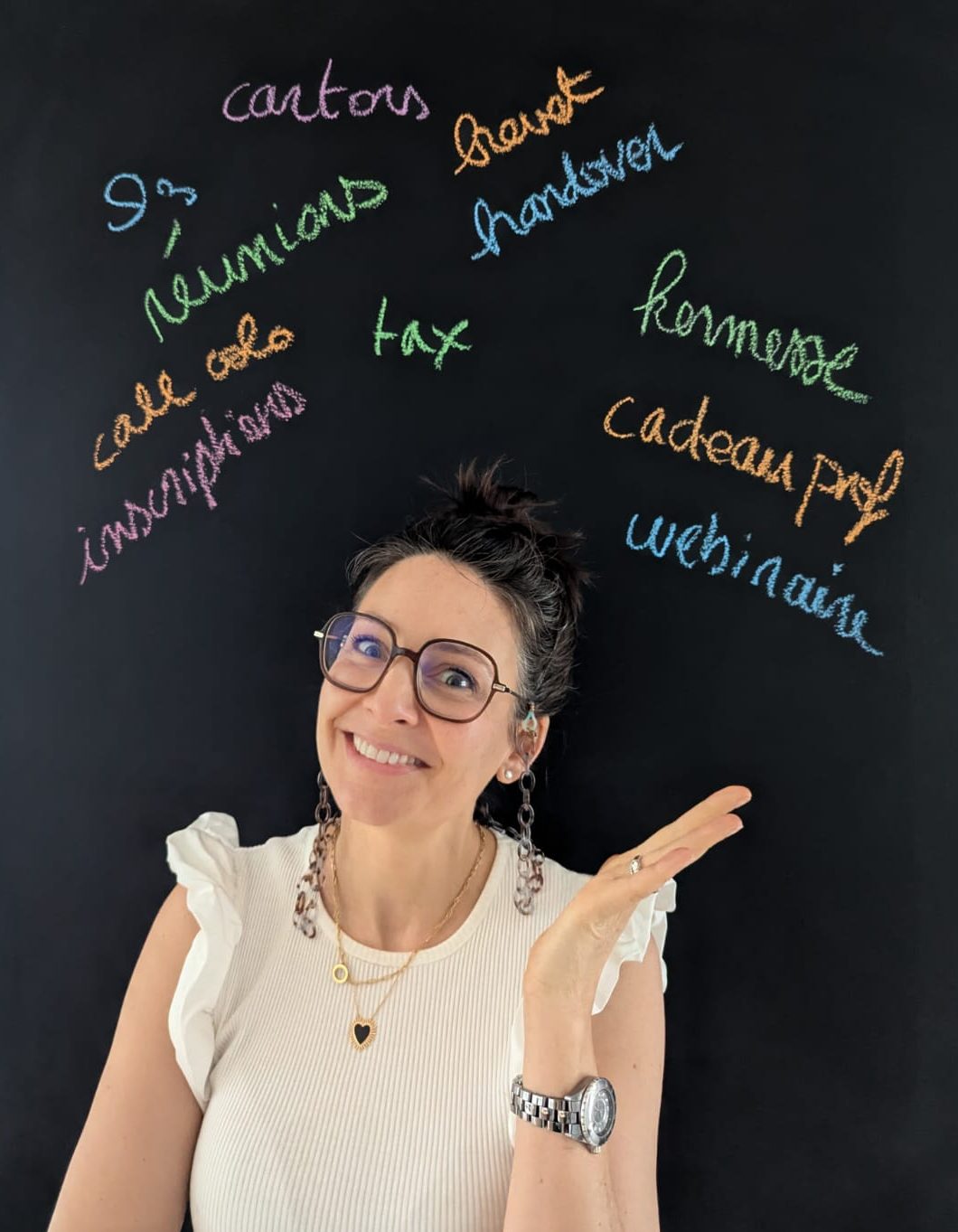
Meanwhile, at the office, the expectations don’t change. We are still required to perform, hit our KPIs, and motivate our teams—as if everything outside were completely normal. This creates a strange, exhausting dissonance between global chaos and the corporate normalcy we are asked to maintain.
If any of this resonates with you, please know you are not alone.
Why Your Brain Goes into Overdrive (It’s Physiology, Not Weakness)
Human brains are hardwired for survival. If you look at Maslow’s hierarchy of needs, safety and security sit right at the foundation, immediately after basic physical needs like food, water, and sleep.
When our sense of global safety feels threatened—by conflicts, violence, or economic instability—our nervous system goes on high alert. Even if these threats are thousands of miles away, our primal brain treats them as immediate danger.
To cope, we instinctively try to protect ourselves using three main strategies:
-
We gather data: We scroll, read, and watch everything to stay informed (doomscrolling).
-
We anticipate: We overthink every worst-case scenario.
-
We control: We try to micro-manage everything in our immediate environment.
While we think we are protecting ourselves, these strategies backfire. They lead to chronic stress, disrupted sleep, lack of focus, loss of motivation, and deep emotional fatigue.
This isn’t a sign of mental weakness. It is physiology. And once we understand how our nervous system reacts, we can work with it rather than against it.
3 Practical Ways to Cultivate Inner Peace Right Now
Step 1: Protect Your Mind From Information Overload
Your inner peace starts with what you choose to let into your mind. To combat media fatigue, build strict boundaries around your digital consumption:
-
Implement a news blackout after 6:00 PM, especially right before going to sleep.
-
Turn off breaking news notifications on your phone. They are designed to trigger a fight-or-flight response.
-
Limit your news intake to a designated 10–15 minute window per day.
My Personal Rule: I listen to one serious news podcast to stay informed. Immediately after, I switch to something humorous or lighthearted. This isn’t about denying reality; it’s about regulating your nervous system. When the news ends, take 10 deep breaths to reset your body.
Step 2: Bring into the World What You Wish Existed More
The world can feel deeply cynical, violent, and polarized. The antidote is to look at what you are actively bringing into your immediate circle. If you want a kinder, more human world, you have to consciously choose to act with kindness today, in tiny moments.
Violence isn’t just geopolitical; it lives in small, everyday behaviors:
-
Snapping at a waiter or service worker.
-
Aggressively shutting down a colleague in a meeting.
-
Sending passive-aggressive emails late at night.
-
Losing patience with your children after a long day.
History doesn’t only change through massive revolutions. It changes through millions of daily micro-behaviors. Ask yourself: Where could I bring a bit more humanity today—at work, at home, or in the way I treat myself?
Step 3: Relentlessly Focus on Your Zone of Control
We cannot single-handedly stop global conflicts, fix international relations, or solve every crisis on our feeds. Trying to carry the weight of the world will only burn you out.
Instead, consciously shift your energy away from your zone of anxiety and pour it into your Zone of Control:
┌──────────────────────────────────────────┐
│  ZONE OF ANXIETY (Global Events, News)   │
│   ┌──────────────────────────────────┐   │
│   │  ZONE OF CONTROL                 │   │
│   │  Your habits, routines, thoughts,│   │
│   │  boundaries, and daily reactions.│   │
│   └──────────────────────────────────┘   │
└──────────────────────────────────────────┘
You can control your daily routines, your digital boundaries, your priorities, your reactions, and the words you use. This focus won’t calm the entire planet, but it will bring stability to your world. It restores a sense of agency, and that is exactly where peace begins.
Conclusion: Inner Peace as a Form of Resistance
The external world may be chaotic, but your inner world doesn’t have to mirror it. Choosing to protect your mental health is not avoidance, it is not selfishness, and it is not denial.
In a world that profit off your outrage and distraction, inner peace is a quiet form of resistance. It is an essential leadership and life practice to sustain ourselves for the long haul.
This week, choose just one lever: protect your digital intake, practice a micro-moment of humanity, or focus purely on what you can control. Do it not to change the entire world, but to preserve yours.
How do you protect your focus and energy when the news cycle gets heavy? Let me know your thoughts and strategies in the comments below.