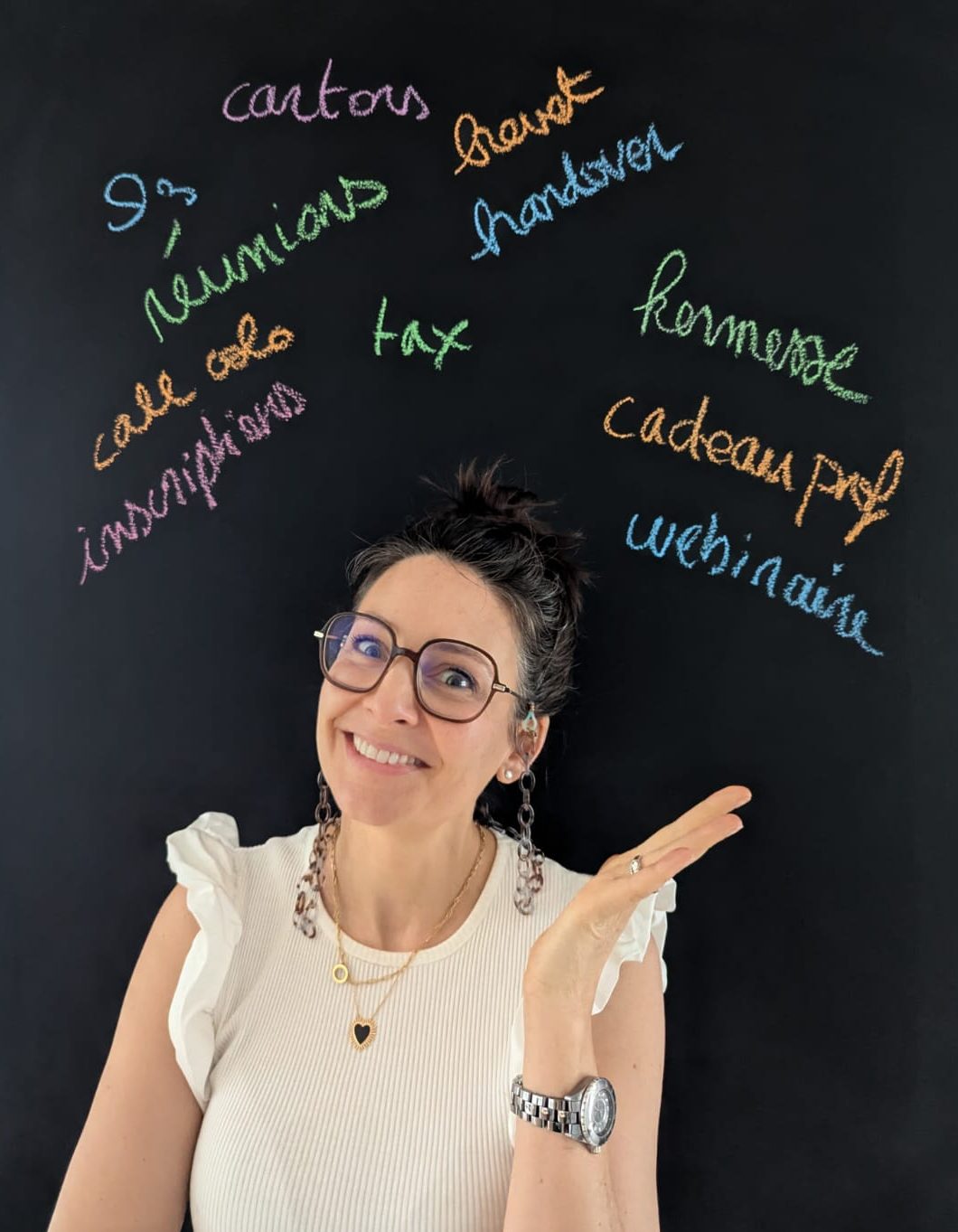
What do the current geopolitical situation, COVID, and the 12-hour power outage some experienced in Spain a few weeks ago have in common? Uncertainty.
And I don’t know about you, but lately, I feel it everywhere. Among my clients, my loved ones… and within myself too.
This feeling of not knowing how everything will evolve, what the consequences will be, or of not being in control: it’s destabilizing, even anxiety-inducing.
It could be a war on the other side of the world……A rumor about reorganisation at work….or that suspended moment while waiting for medical test results.
👉 So, what do we do in a world where uncertainty is everywhere?
1. Why It’s normal for uncertainty to exhaust us
In reality, we all hate uncertainty! Our brains are wired that way.
- Uncertainty triggers stress, even chronic stress, because our brain processes it as a potential threat. It’s our survival reflex in the face of perceived dangers.
- It also generates an enormous cognitive load: we anticipate all possible scenarios, we ruminate, we imagine the worst. Another archaic survival strategy: “Better to anticipate all dangers than to be caught by surprise.”
- And then uncertainty makes us lose control, and we hate that. We like security (a fundamental need according to Maslow), routines (like children!), and predictability! Again, having control increases our chances of survival!
💡 Little neuro fact: Did you know that our brain prefers bad news to no news at all!? (Yes, some studies have shown this.) Not knowing generates more stress than knowing the worst.
At work, this uncertainty translates into decreased productivity. According to a Harvard Business Review study, teams facing prolonged periods of uncertainty see their performance decrease by 15% on average!
2. What we all tend to do… that doesn’t help!
When uncertainty sets in, we all do more or less the same things:
- We consume news nonstop… 24/7 news channels, compulsive scrolling (especially in the evening… ouch). One study showed that watching the news decreases our immunity for 20 minutes!! We absorb waves of negativity, often without perspective. And our brain interprets this as a real threat.
- We spend a lot of time imagining all possible outcomes, planning solutions to be prepared for all eventualities… to the point of exhaustion.
- We fill our calendars to avoid facing our fears and to have the impression of being efficient and in control… but we end up ignoring our real needs: slowing down, resting…
These behaviors only amplify our fears, stress, fatigue, and anxiety instead of easing them. So what do we do to navigate uncertainty more peacefully?
3. 4 simple, tested approaches to navigate uncertainty more peacefully!
1- Limit your exposure to bad news
A little information? Yes. Too much information? No thanks. We know this: too much anxiety-inducing news can fuel stress, even affect our mental health (remember the study on the impact of watching the news)…
💡 So, without needing to live like a hermit, here are some simple and effective tips:
- 🚫 No news in the evening, and especially not in bed just before sleeping (the perfect recipe for a bad night’s rest).
- 📱 Turn off notifications from news apps! (or better yet, uninstall them!)
- 🌟 Follow positive news!! to rebalance your perception. The story says it takes 3 positive news stories to counterbalance one negative one (because of our negativity bias!), so don’t hesitate to soak up good news!
For example: the English magazine: https://www.positive.news/ or The Happy Broadcast Instagram account. There are also plenty of podcasts! Feel free to share your recommendations with me!
- ⏸️ Take news breaks! A full day or during vacations! Sometimes, living in a happy bubble is exactly what we need.
2- ‘Control the controllables’ – refocus on what you can control
“Control the controllables” – one of the mantras of my Resilience@Google team! In an uncertain world, our power lies in coming back on what depends on us, here and now:
- Our routines (morning, evening, solo, and with family)
- Our thoughts and reactions to the unexpected
- The intention we set for the day
- Our organisation, priorities, presence, boundaries, and words
💡 Some helpful practices for everyone:
- 🤔 Ask yourself: “What can I control right now?”
- 💪 Then focus your energy, attention, decisions, and actions on that, rather than getting stuck in “what if.”
- 🌱 And finally, as hard as it may be (I’ll talk about this next), learn to let go of what’s outside our sphere of influence. It’s a real step towards serenity.
For instance, we can’t always predict health issues, but we can adopt healthy habits (exercise, healthy food, sleep…).
We also can’t always prevent layoffs, but we can grow our network and stay in a mindset of continuous learning, etc.
💡 For managers: Communicate clearly about what’s certain and what’s not. Honesty builds team trust, even in uncertain times.
3- Accept uncertainty!!
Accepting uncertainty is hard, but by doing it gradually – starting with small things – you’ll strengthen your tolerance for it.
This practice is, paradoxically, empowering: when we deliberately let go of what’s outside our control, we reclaim power over what affects us.
💡In the workplace, teams that accept uncertainty as part of today’s reality are more agile and adaptable.
💡 Practical tip: Start by accepting the small things you can’t control – like a sudden change of plan, a budget cut, or a delay in transport.
Recently, our barbecue for 20 was nearly ruined by a city-wide gas shortage in Madrid (following the power outage). But instead of stressing, I deliberately reminded myself: It’s not in charge of the gas supply in the house. And this small shift gave me the chance to let go!
🔑 Essential reminder: This small situation might seem trivial, but it’s an opportunity to practice coexisting peacefully with what we can’t control.
4- Cultivate bubbles of positivity in the chaos
Our brain is wired with a negativity bias – it notices and remembers the bad more than the good. Not very fair, right? 😅
So instead of sinking into the general pessimism, let’s push back: create intentional pockets of positivity, even (and especially) in chaotic times. Yes, it might sound a bit “unicorns and rainbows”… but so what?
Would you rather focus on what’s good in your life, or constantly dwell on what’s wrong? It’s a choice – and the good news is: this ability can be trained.
💡 Practices for everyone:
- 😄 Spend time with your energisers – the people who make you laugh, support you, and remind you that life ? .
- 🌱 Train your brain to notice what’s going well – a smile, a sunbeam, a quiet moment- and if you like anchor them in a gratitude journal. For instance, write down three small joys each day, especially during stressful times. It grounds you, feels good – and it works.
- 🧡 Share appreciation with loved ones or colleagues – during a team offsite or over dinner, ask everyone to share one thing they appreciated about someone else. Quick, real, and powerful..
- 🔄 Reframe challenges as opportunities – ask: “What good can come from this?“ It’s not toxic positivity, it’s about gaining the ability to step back, see the bigger picture, and choose how you respond – rather than feeling powerless or stuck.
💡 In teams: Besides doing gratitude exercises, try a “weekly wins” ritual where each person shares a success, even a small one. It strengthens team connection and keeps the focus on progress over uncertainty.
And what if we added a touch of hope to all this? Not naive hope, but lucid hope: the belief that even in uncertain times, something good in humanity is still possible.
In conclusion
Uncertainty is no longer the exception – but was it ever, really, in human history?. It’s the norm in both our personal and professional lives. Rather than resisting it, let’s learn to navigate it with calm and clarity.
The leaders of tomorrow won’t be those who eliminate all uncertainty – that’s an impossible mission – but those who build the ability to move through the unknown with confidence, turning every unclear situation into a chance for learning and growth.
This week, I invite you to take on a small challenge: identify one uncertain situation, and instead of pushing against it, apply one of the four approaches shared above and notice what shifts!
📸 Photo taken from my office window in Singapore in June 2013, during the worst haze episode ever recorded. For several weeks, the city was shrouded in a toxic fog caused by deforestation in Indonesia. And yet… the sun still shone through the haze — a reminder that even in uncertainty, something good can emerge: since then, new regulations have been put in place to better protect air quality and promote more responsible forest management. ☀️